Foundation Excavation That Builders Trust
Basement Excavation in Toney for new residential basements and foundation construction requiring precise depth control and stable sidewalls
Excavation depth accuracy and sidewall stability determine whether basement foundation work proceeds on schedule or faces delays from over-digging and soil collapse. Builders working with excavation that matches foundation plans pour concrete walls without adjusting forms or adding fill to correct depth errors, and stable sidewalls prevent cave-ins that threaten worker safety and damage adjacent property. Sundown Excavation LLC provides basement excavation services across Toney and Madison County, using professional equipment suited for varying soil conditions to prepare sites that support confident construction starts.
The process begins with marking foundation perimeter dimensions and establishing excavation depth based on basement ceiling height, footing thickness, and frost line requirements. Operators remove soil in stages, checking depth measurements against grade stakes and adjusting cut angles to maintain sidewall stability. Soil composition affects how excavation proceeds, with clay requiring slower cutting to prevent sidewall slumping and sandy soils needing slope adjustments to avoid collapse.
Schedule a free on-site estimate to evaluate soil conditions and confirm basement excavation requirements for your property.
Our Services
Why Basement Excavation Requires Coordination and Precision
Excavation depth must account for footing thickness, basement slab depth, and headroom requirements, with measurements verified at multiple points to ensure the excavated floor sits level across the entire basement footprint. Sidewall angles are cut to prevent collapse while maintaining enough vertical face for forming basement walls, and equipment operators adjust bucket positioning to avoid damaging utility lines that cross near excavation zones. Efficient excavation minimizes the time foundation areas sit exposed to weather, which reduces water accumulation and soil softening that complicate concrete placement.
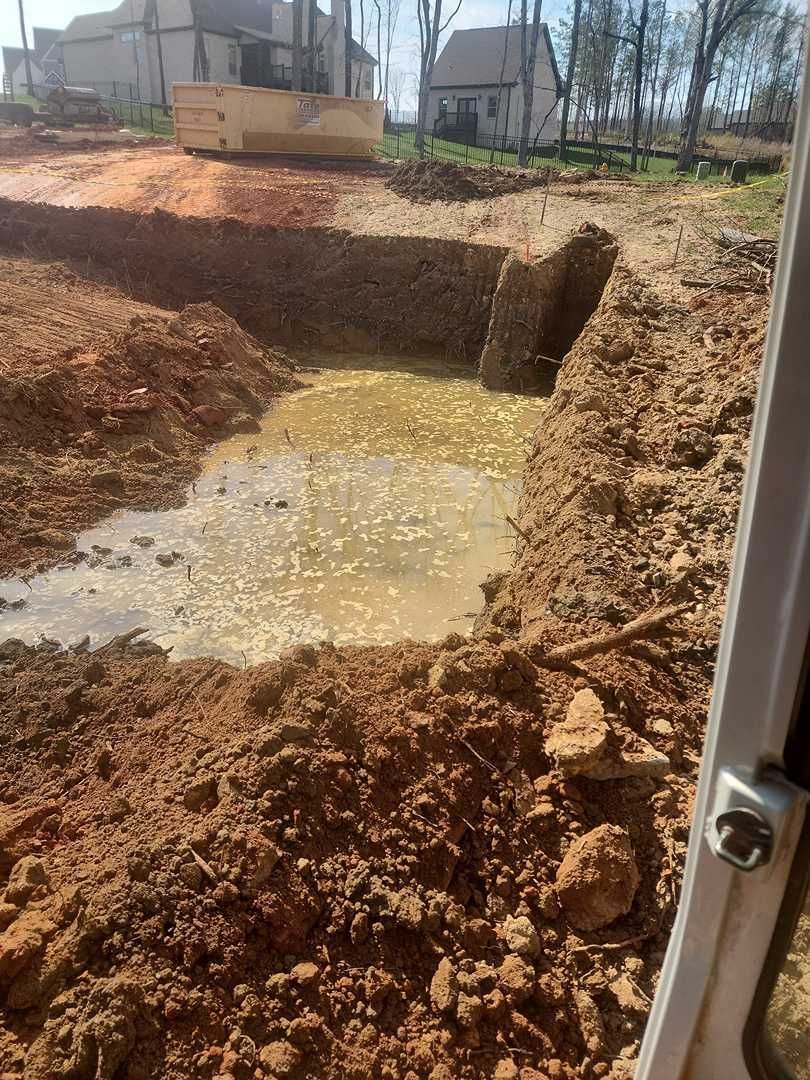
Once basement excavation completes, builders see a rectangular excavation cut to consistent depth with corners squared to match foundation plans, sidewalls stable enough to support forming systems, and floor surfaces level enough for footing preparation without extensive regrading. Excess soil either redistributes across the site for final grading or hauls away when the property cannot accommodate the material volume.
Coordination with homeowners, builders, and contractors throughout the project ensures excavation timing aligns with concrete delivery schedules and weather forecasts. Madison County properties sometimes encounter groundwater seepage or clay layers that require dewatering or sidewall reinforcement, and addressing these conditions during excavation prevents foundation delays.
Sundown Excavation LLC handles residential and commercial basement excavation with attention to safety and accuracy standards that support efficient foundation construction.
Common Questions About
Basement Excavation
Basement excavation involves specific depth and stability requirements that differ from standard site grading, so understanding the process helps property owners prepare for foundation work.
How deep does basement excavation need to go?
Depth depends on basement ceiling height, footing thickness, slab depth, and frost line requirements, typically reaching eight to ten feet below existing grade for full-height basements.
What soil conditions in Toney affect basement excavation?
Clay soils hold sidewalls well when dry but soften quickly when wet, requiring faster concrete forming after excavation, while sandy soils need sloped sidewalls or temporary shoring to prevent collapse.
How are excavation sidewalls kept stable during construction?
Operators cut sidewalls at angles based on soil type and excavation depth, with steeper cuts in stable clay and gentler slopes in loose sand, and shoring systems added when vertical walls are required.
What happens if groundwater appears during excavation?
Dewatering pumps remove standing water so footing and slab work can proceed, and drainage systems installed during foundation construction manage long-term groundwater intrusion.
When should basement excavation occur relative to other construction phases?
Excavation happens after site layout and utility location but before foundation forming, with timing coordinated to minimize the period excavated areas sit exposed to rain and temperature changes.
Sundown Excavation LLC provides excavation services for new residential basements and foundation construction throughout Madison County, with experienced operators and equipment capable of handling varying soil conditions. Arrange a site consultation to review excavation requirements and coordinate basement foundation preparation with your construction schedule.