Ponds Shaped for Function and Longevity
Pond Excavation in Toney for farm ponds, recreational ponds, and property improvements requiring precise grading and drainage control
A recreational pond that holds water year-round without excessive seepage or siltation requires excavation that accounts for soil impermeability, watershed size, and embankment stability. Sundown Excavation LLC shapes and grades pond excavation based on property layout and the customer's goals, whether that involves livestock watering, fish habitat, irrigation storage, or aesthetic landscaping features. Equipment capable of handling large earthmoving projects efficiently removes material, shapes slopes, and constructs embankments that withstand hydrostatic pressure and seasonal water level changes across Toney and Madison County properties.
Pond excavation begins with identifying the lowest elevation point that captures runoff, then cutting into existing grade to create depth zones that support aquatic life and prevent complete freezing in winter. Excavated material either builds embankments to increase water storage capacity or redistributes across the property, with haul-away services available when excess soil cannot remain on-site. Slopes are graded to prevent erosion and allow safe access, and spillway locations are selected to prevent overtopping during heavy rain events.
Request a free site evaluation to assess watershed characteristics and determine pond excavation feasibility for your property.
Our Services
What Proper Pond Excavation Accomplishes
Excavation depth varies across the pond floor to create shallow zones for aquatic vegetation and deeper areas that maintain cooler temperatures during summer heat. Side slopes are cut at angles that resist erosion while allowing livestock access where needed, typically ranging from three-to-one in stable clay soils to flatter grades in sandy material. Compacted embankments raise water storage capacity by increasing the distance between the pond floor and the spillway crest, and clay cores added to embankments reduce seepage through porous soils.
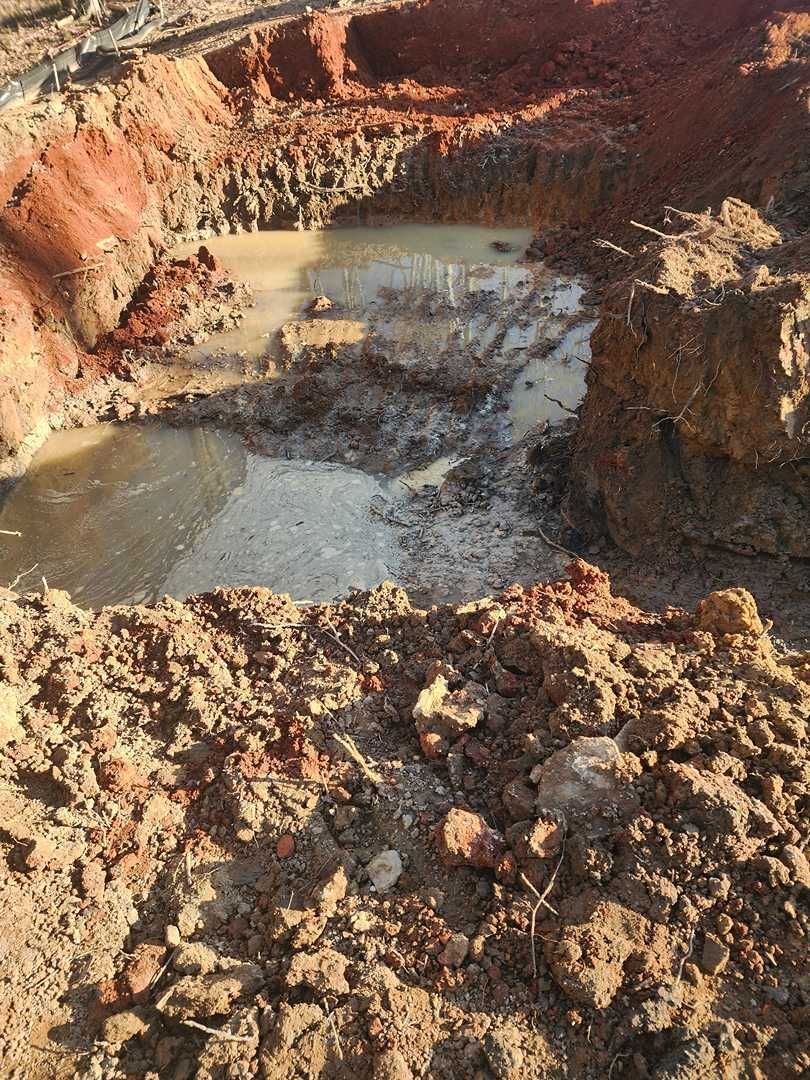
After pond excavation finishes, you see a basin with defined depth zones, stable side slopes that resist slumping during water level fluctuations, and an embankment constructed to height specifications with a spillway positioned to handle overflow without eroding the dam face. Water begins filling the pond through surface runoff and groundwater infiltration, with fill rates depending on watershed size and rainfall patterns. Sundown Excavation LLC handles residential and commercial pond excavation with equipment matched to project scale, from small farm ponds to large recreational impoundments.
Long-term pond performance depends on soil characteristics that affect seepage rates and watershed conditions that determine fill frequency. Madison County properties with clay-heavy soils hold water better than sandy sites that require compacted clay liners or synthetic membranes to reduce infiltration losses.
Haul-away services for excess soil and material prevent unsightly spoil piles and allow precise final grading around the pond perimeter.
What Property Owners Ask About
Pond Excavation
Pond excavation decisions involve understanding how site conditions affect water retention and what design features support intended uses.
What determines whether a property can support a pond?
Watershed size, soil impermeability, and groundwater presence determine whether the pond fills and holds water, with clay soils providing better sealing than sandy or rocky substrates.
How deep should a pond be excavated?
Depth depends on intended use, with livestock ponds requiring four to six feet to prevent complete freezing and fish ponds needing deeper zones to maintain oxygen levels and temperature stability during summer heat.
What happens to soil removed during pond excavation in Toney?
Excavated material typically builds embankments to increase storage capacity, redistributes across the property for grading, or hauls away if the site cannot accommodate the volume.
How are pond slopes stabilized to prevent erosion?
Side slopes are graded at angles that resist slumping based on soil type, and vegetation establishes on exposed slopes to reduce erosion from wave action and rainfall runoff.
When is the best time to excavate a pond?
Dry weather allows easier excavation and compaction work, though projects can proceed year-round with adjustments to equipment and material handling based on soil moisture content.
Sundown Excavation LLC provides pond excavation services for farm ponds, recreational ponds, and property improvements throughout Madison County, with equipment capable of handling large earthmoving projects efficiently. Contact us to schedule a site evaluation and discuss pond excavation options based on your property's characteristics and intended use.